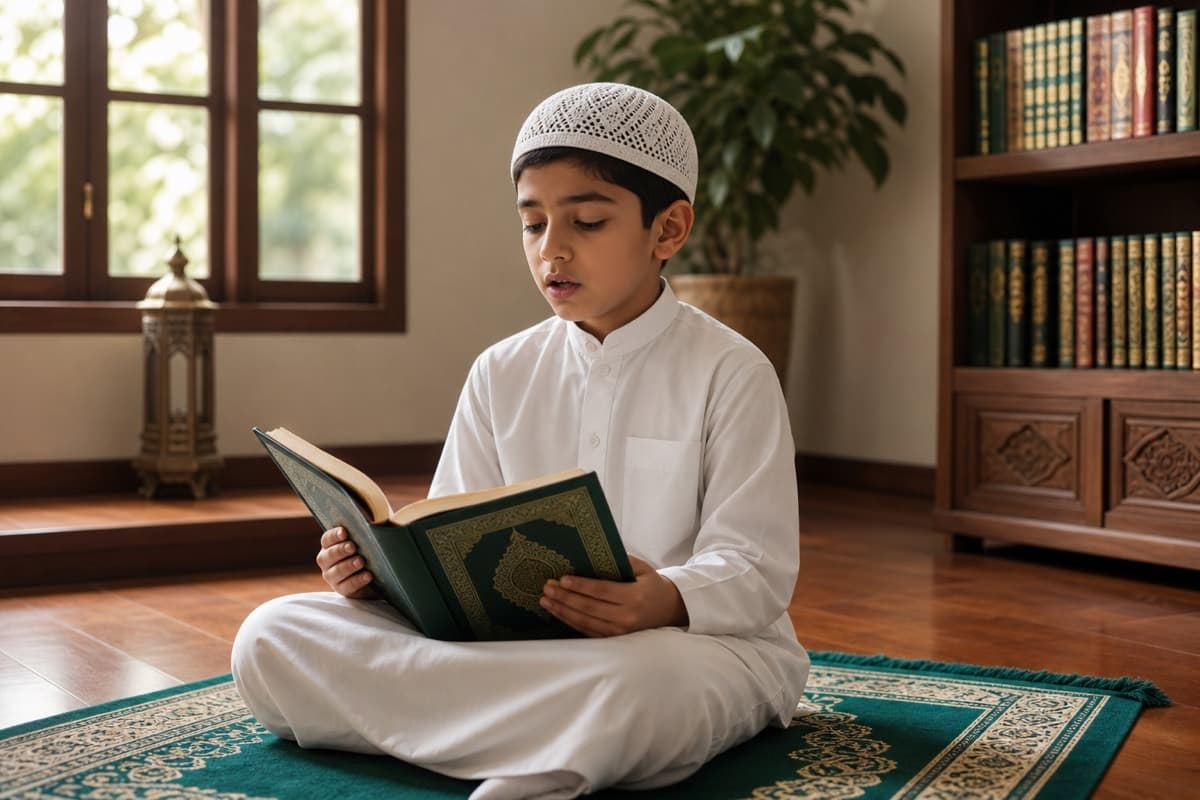
Online Hifz classes for kids let children memorise the Quran at home with a live Hafiz or Hafiza — using the same Sabaq–Sabqi–Manzil system used in traditional Hifz schools, without daily travel.
Quick answer: Start Hifz when your child can read Quran with basic fluency (often ages 7–10). Online Hifz needs 5–6 short sessions per week plus home revision. Hifz program details · kids free trial.
7–10Best start age
5–6×Live lessons / week
25–40mPer session
3 layersSabaq system
Best age to start online Hifz
- Ideal: 7–10 after Noorani Qaida and fluent Juz Amma reading.
- Earlier: short surah memorisation is fine at 5–6, but full Hifz needs reading skill.
- Later: ages 11–14 often progress faster if motivated.
Related guide: best age to start Quran learning and how long to memorize the Quran.
The Sabaq–Sabqi–Manzil system
| Layer | Meaning | In a live class | Parent tip |
|---|---|---|---|
| Sabaq | Today's new lines | Tutor listens + corrects | Keep new portion small and solid |
| Sabqi | Recent days' memorisation | Quick re-test | Revise before adding more |
| Manzil | Older completed Juz | Weekly cycle | So nothing is forgotten |
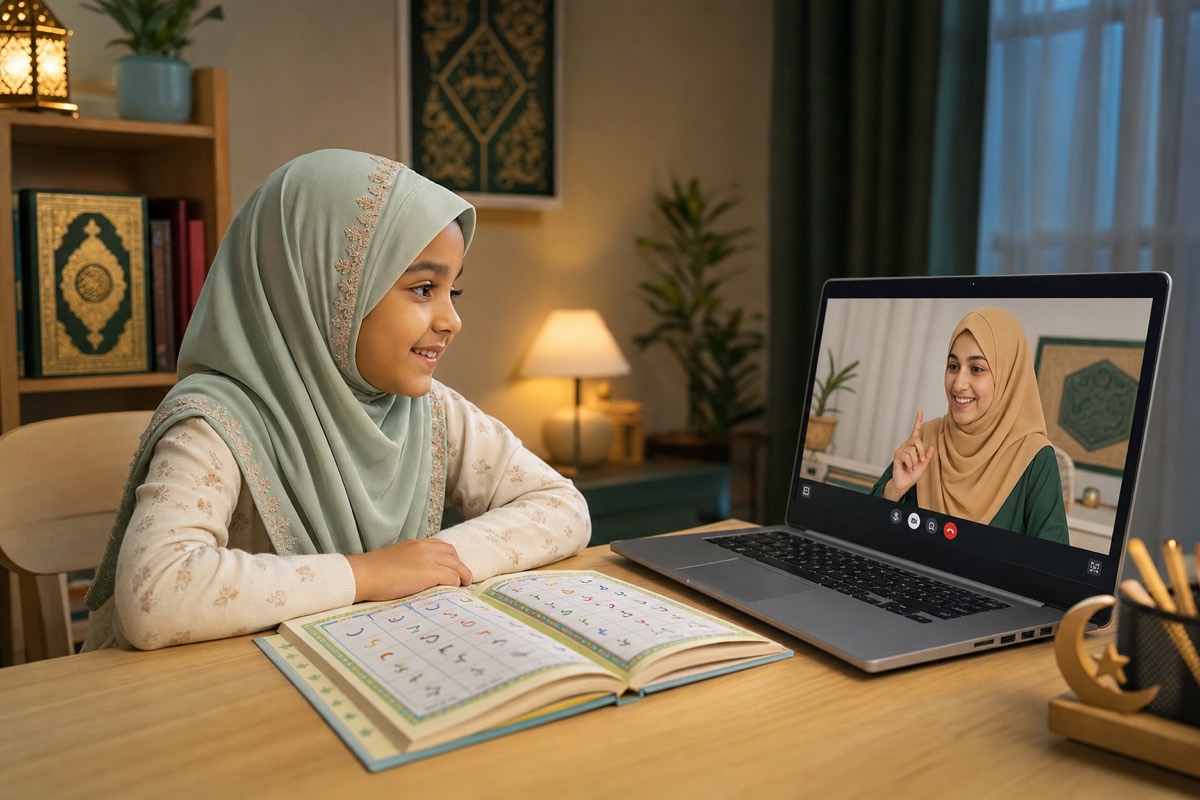
Sample weekly schedule (kids)
| Day | Live class | Home revision |
|---|---|---|
| Mon–Thu | 30–40 min after school | 10 min before bed (optional) |
| Fri | Shorter review or off | Listen to yesterday’s Sabaq |
| Sat–Sun | 1 catch-up if needed | 15 min Manzil loop |
- UK: often 5–6pm GMT after school; weekends for catch-up
- US: early morning or after school EST/PST
- Lesson frequency should leave enough time for consistent home revision
How many pages per day?
Ages 7–9: a few lines to half a page. Ages 10–12: half to one page when retention is strong. Quality beats speed — rushing creates weak Hifz that collapses under exam pressure.