Noorani Qaida Pronunciation Guide for Kids
Noorani Qaida pronunciation for English-speaking families: letter names vs reading sounds, makharij cues, transliteration limits, and when to use a teacher.
How to use this guide
Noorani Qaida pronunciation is where many motivated families get stuck. They can recognise letters on a chart and still feel unsure when a child says a heavy ص or a throat ع. English spellings look helpful and then quietly teach the wrong sound. This expanded guide separates letter names from reading sounds, explains how to use articulation cues without forcing the mouth, clarifies NoorPath’s honest position on audio review status, and gives parents a practical correction workflow. The goal is confident, calm practice — not perfect Tajweed certificates from a webpage. Families in diaspora settings especially benefit from tools that work on a phone after school, keep Arabic visible, and connect to a live tutor when sounds remain uncertain. Take ten minutes to inspect the curriculum map, try one recognition activity, and write down one question for a teacher before paying for any long package. That habit protects attention, money, and trust. Return to the Interactive Noorani Qaida hub whenever you need the full module list, letter index, or links to free games. Keep commercial class booking on the trial and pricing pages so practice tools stay uncluttered. If a claim on any site cannot be demonstrated in a short trial session or a visible public page, treat it as unfinished product work rather than a reason to enrol immediately. Share useful free practice links with another parent only when the resource is genuinely calm and accurate. Over time, small honest routines outperform dramatic marketing promises, especially for beginners building Arabic letter confidence before full Quran pages. Diaspora families often juggle school English, community Urdu or other home languages, and Arabic for Quran. That mix is normal; it does not mean the child “cannot learn sounds.” It means practice slots should be short and specific. Record one unclear letter for the tutor rather than correcting every syllable yourself if you are unsure. Celebrate recognition wins separately from articulation wins so the child does not feel constantly wrong. Over months, cleaner short vowels and fewer mix-ups between similar letters are better signals than dramatic overnight change. Keep this guide bookmarked beside the audio honesty page so expectations stay realistic while tools improve.
Letter name versus reading sound
The alphabet name helps you find the symbol. The reading sound depends on Harakaat and neighbouring letters. A child may say “Baa” correctly as a name and still need practice reading بَ, بِ, and بُ as short syllables. Online lessons should train both skills explicitly. When practising, ask “name or read?” so the child knows which task is active. Confusion between naming and reading is one of the most common hidden blockers in beginner classes.
Why transliteration is only a temporary bridge
Writing “ayn” or “khaa” can help memory, but it cannot encode every Arabic quality. Prefer looking at the Arabic glyph first, then using English letters as a nickname. Remove transliteration as soon as recognition is stable. If a child reads only from English spellings, they are not yet reading Arabic. NoorPath letter pages lead with Arabic forms for this reason.
Using makharij and mouth cues safely
Articulation cues orient attention: lips, tongue tip, throat region. They are not instructions to force painful movement. Model once, invite a gentle attempt, and stop if the child tenses. Some letters need weeks of light exposure rather than intense drilling. Parents should not invent physical tricks from unverified videos. Follow the tutor’s cues for hard letters.
Audio guidance and NoorPath’s review disclosure
Listen-and-repeat tools help consistency when assets exist and are trustworthy. NoorPath’s public pronunciation materials state that pages must not claim Qari-reviewed audio until specific files complete formal review. Live teachers remain the correction path for uncertain sounds. If you use any recording, keep the Arabic visible and limit repetitions. See also the honest “with audio” guide in this cluster for product-gap detail.
A parent workflow for pronunciation problems
When something sounds wrong: (1) check whether the child is looking at the correct letter, (2) replay one approved model if available, (3) allow one calm attempt, (4) write the letter and date for the tutor, (5) switch to recognition practice so the session still ends positively. Do not turn the kitchen table into an exam. Children remember the emotional tone as much as the sound.
Teacher priorities for pronunciation in Qaida
Teachers should separate recognition errors from articulation errors in notes. A child who points correctly but speaks incorrectly needs a different drill than a child who cannot find the letter. Use one contrast pair per lesson. Avoid stacking emphatic letters on a tired day. Send home only sounds already modelled. Align game homework to recognition, not unheard articulation targets.
Moving from Qaida pronunciation toward Quran reading
Stable short vowels, cleaner hard letters, and less guessing in joined words signal readiness for longer mushaf lines — still at a calm pace. Pronunciation work continues after Qaida; it does not end with a finished booklet. Keep expectations kind and incremental.
A one-week action plan parents can follow
Day one: open the Interactive Noorani Qaida hub and note the module that matches your child. Day two: run a five-minute recognition session on one letter or vowel using a letter page or free game. Day three: ask your child to teach you one form difference they noticed. Day four: repeat yesterday’s target and add one contrast letter. Day five: if sounds feel uncertain, request a free live trial or message the tutor with specific letters. Weekend: light review only — one favourite letter and one known success. Write observations in a shared note so adults stay aligned. This rhythm builds evidence without turning the week into a performance. Adjust timing for your timezone and school load, and keep devices in a family space for younger children. If motivation drops, shorten the session rather than adding louder entertainment. Progress in beginner Quranic Arabic is usually quiet and cumulative; protect that quiet with clear targets and honest tools.
See the learning approach
This screenshot documents NoorPath’s learning-platform experience. It is shown for educational and product context. Free playable browser games are linked below separately from the platform screenshots.
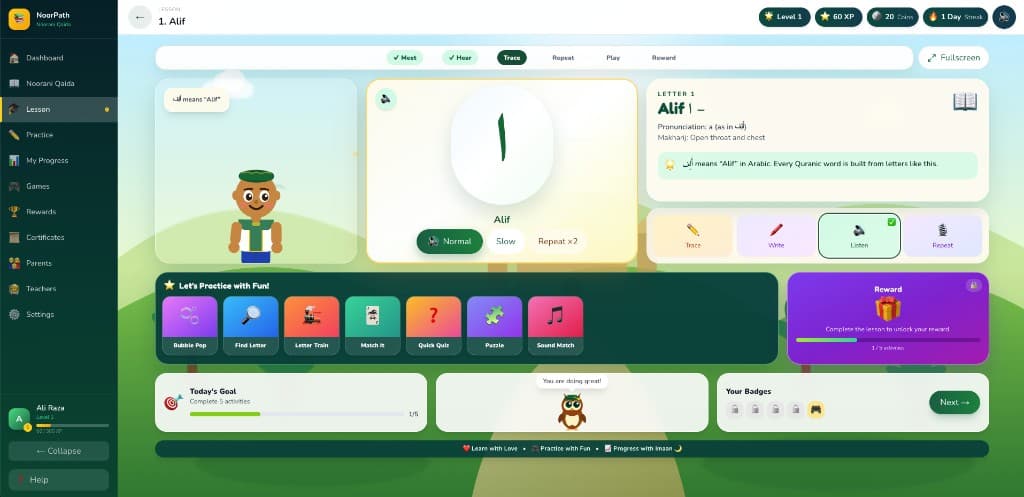
Noorani Qaida Pronunciation Guide for Kids checklist
Look at Arabic before English spellings
Separate naming from reading tasks
Use gentle cues; stop if tense
Rely on teachers for uncertain sounds
Log problem letters for the next lesson
Frequently asked questions
Does NoorPath claim Qari-reviewed audio on every pronunciation page?
No. Public copy describes audio guidance carefully and keeps live teacher correction as the path for uncertain sounds until specific recordings complete formal review.
How can English-speaking parents help with Noorani Qaida pronunciation at home?
Protect recognition practice, avoid inventing sounds from English spelling, replay only approved models, and send unclear letters to the tutor instead of drilling guesses.
What is the difference between letter names and Quran reading sounds?
Names identify symbols; reading sounds apply vowels and rules to pronounce syllables and words. Children need both, taught as separate tasks.
Continue exploring
Want guided Noorani Qaida lessons?
Explore live one-to-one classes for ages 4+, with tutor matching based on learner needs, timezone, and availability.