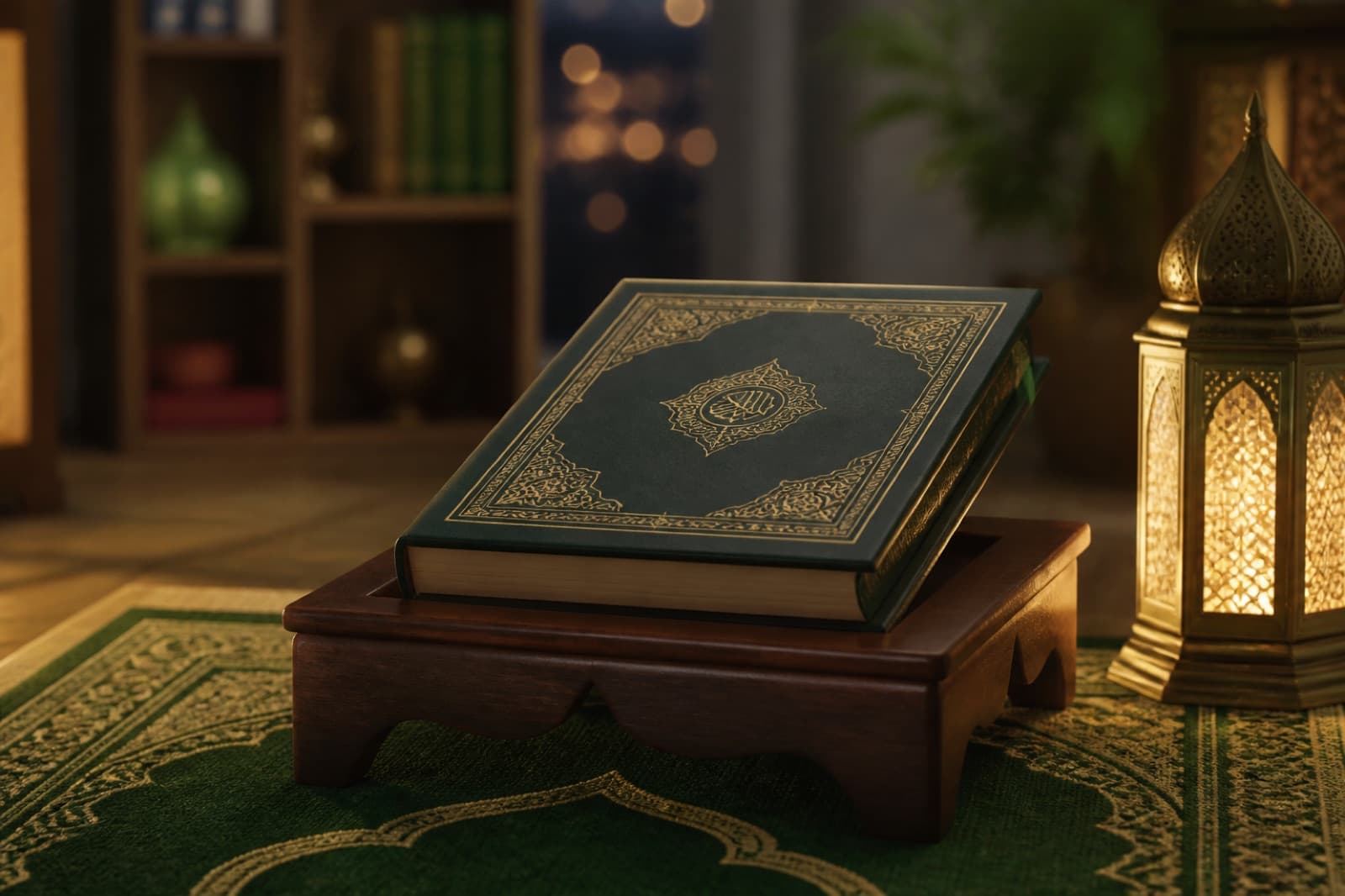
Manzil Dua — Quranic Verses for Protection & Ruqyah
FT
Faisal Tariq
Islamic Education Specialist & Quran Learning Expert
Published: August 28, 2026 10 min read
The Manzil (منزل) is a well-known collection of verses from the Holy Quran, gathered together as a form of ruqyah — spiritual protection and healing sought only through the words of Allah. Many Muslim families recite it daily for protection from harm, the evil eye, and negative influences.
The Manzil is not a separate "book" or a new dua. Every word of it is Quran. It is simply a curated selection of specific verses that scholars have long recommended for protection, brought together in one convenient sequence so a believer can recite them regularly.
In this guide we explain what the Manzil is, which verses it contains, how and when to recite it, and the correct belief a Muslim should hold while using the Quran for protection.
What Is the Manzil?
The Manzil is a compilation of 33 verses drawn from various chapters of the Quran. This particular arrangement is widely attributed to Shaykh Muhammad Zakariya al-Kandhlawi. Because it collects the strongest protective verses in one place, families often read it once or twice a day.
Key point: The protection comes from Allah alone. The verses are a means (sabab); the results are always in Allah's hands. Reciting with sincerity, understanding, and reliance on Allah is what matters most.
Which Verses Are in the Manzil?
The Manzil brings together the following passages from the Quran:
Surah
Verses
Al-Fatiha (1)
1–7
Al-Baqarah (2)
1–5, 163, 255–257 (incl. Ayatul Kursi), 284–286
Al-Imran (3)
18, 26–27
Al-A‘raf (7)
54–56
Al-Isra (17)
110–111
Al-Mu’minun (23)
115–118
As-Saffat (37)
1–11
Ar-Rahman (55)
33–40
Al-Hashr (59)
21–24
Al-Jinn (72)
3
Al-Kafirun (109)
1–6
Al-Ikhlas (112)
1–4
Al-Falaq (113)
1–5
An-Nas (114)
1–6
Two Cornerstones: Ayatul Kursi & the Three Quls
At the heart of the Manzil are some of the most powerful protective verses in the Quran. Ayatul Kursi (2:255) is foremost among them:
Allahu la ilaha illa huwal-Hayyul-Qayyum, la ta’khudhuhu sinatun wa la nawm.
Meaning: "Allah — there is no god but He, the Ever-Living, the Sustainer of all. Neither drowsiness overtakes Him nor sleep."
The Manzil also ends with the three protective surahs — Al-Ikhlas, Al-Falaq, and An-Nas — the same surahs the Prophet ﷺ would recite for protection each night. You can read more in our guide to the Four Quls and Ayatul Kursi.
How and When to Recite the Manzil
Frequency: Commonly recited once in the morning and once in the evening.
State: With wudu where possible, in a calm place, understanding that Allah is the true Protector.
For the home: Many families recite it aloud so the household can listen together.
For illness or distress: It may be recited and gently blown over oneself or a sick person, as the Prophet ﷺ did with the protective surahs.
Recite it correctly: Because the Manzil is entirely Quran, correct pronunciation (Tajweed) preserves the meaning. If you would like help reading these verses accurately, explore online Tajweed classes or learn Quran online with a live tutor.
Keeping the Right Belief
Using the Quran for protection is established in the Sunnah, but it must be paired with sound belief:
Protection and cure are from Allah alone.
The verses are a lawful means, not a guaranteed formula.
Avoid amulets or practices that contradict Tawhid.
Combine recitation with prayer, charity, and staying away from sin.
Frequently Asked Questions
What is the Manzil dua? +
The Manzil is a compilation of 33 verses from the Quran, gathered together for protection and ruqyah. Every word of it is Quran; it is simply a curated selection of protective verses read as one sequence.
Is the Manzil found in the Quran? +
Yes. All of the Manzil is Quran. It draws verses from surahs such as Al-Fatiha, Al-Baqarah, Ar-Rahman, Al-Hashr, and the last three surahs. The arrangement is widely attributed to Shaykh Muhammad Zakariya al-Kandhlawi.
How often should the Manzil be recited? +
It is commonly recited once in the morning and once in the evening. Some families also recite it during illness or distress, blowing gently over the affected person as the Prophet ﷺ did with the protective surahs.
Does the Manzil guarantee protection? +
Protection comes from Allah alone. The Manzil is a lawful means (sabab) taught through the Sunnah of reciting Quran for protection, but the outcome is always in Allah's hands. It should be paired with sincere faith and righteous actions.
Can I recite the Manzil without wudu? +
Reciting from memory without wudu is generally permitted, but reciting in a state of purity is better and more respectful. If touching the physical mushaf, most scholars require wudu.
Islamic Education Specialist & Quran Learning Expert
Faisal Tariq is identified on NoorPath as the academy's founder. This article is published as part of NoorPath's Quran and Islamic education resource library.
NoorPath uses essential storage for your preferences. With your permission, we also use Google and Meta tools to understand visits and measure enquiries. Read our Privacy Policy.