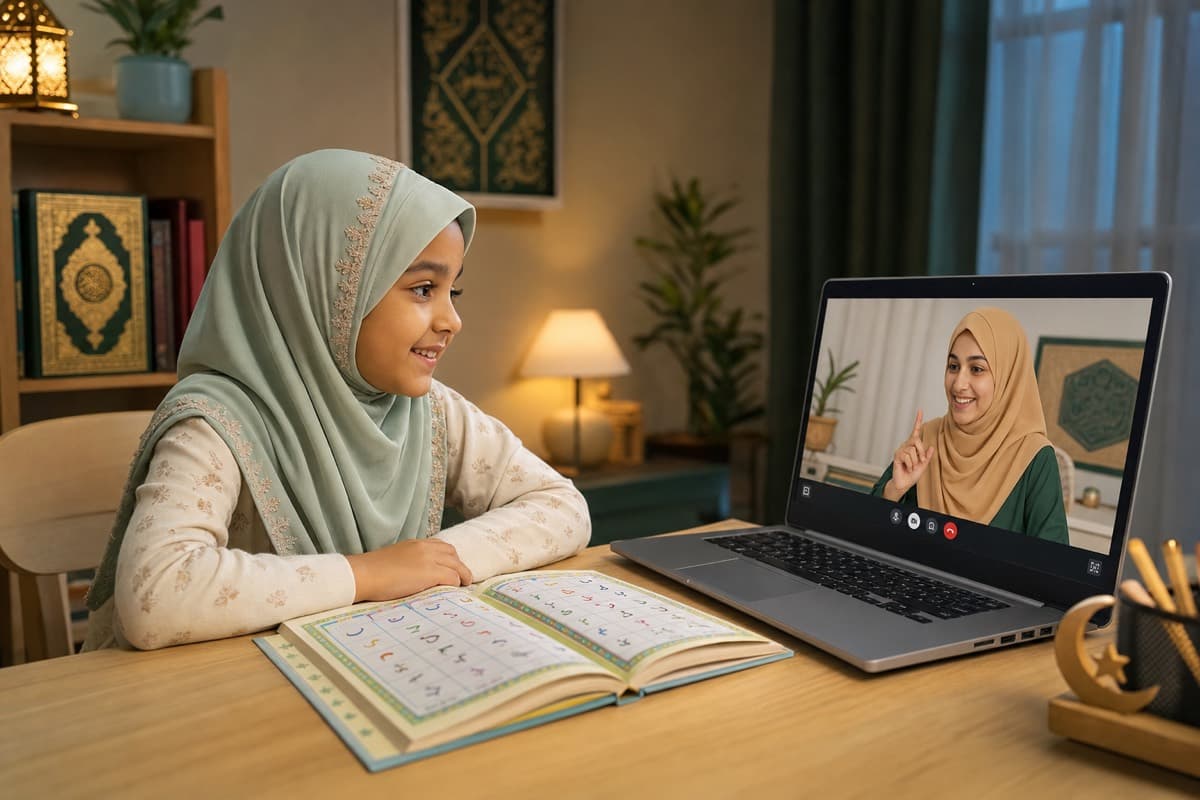
Guide for families in Bangladesh
Online Quran Classes in Bangladesh: One-to-One Tajweed at Home
A guide for families in Bangladesh on live one-to-one online Quran lessons — moving from Qaida to fluent reading with Tajweed, scheduling around the Friday–Saturday weekend in BST, power and connection tips, tutor checks and USD fees.
Reviewed 4 November 2026· Service details are checked against NoorPath's published policies and current booking process. Read the editorial policy.
When does a one-to-one online lesson help most?
When a child reads but makes the same pronunciation mistakes, or needs a patient teacher who hears every letter rather than a turn in a group.
Many children in Bangladesh learn to read the Quran at home or at a local maktab. Online lessons are useful when parents want focused Tajweed correction, flexible times around school and coaching, or explanations in English for children at English-medium schools.
What is the path from Qaida to fluent reading?
Qaida first, then guided reading from the Mushaf, then Tajweed — with Hifz for those ready to memorize.
| Stage | What the tutor works on |
|---|---|
| Noorani Qaida | Letter sounds, vowel marks and joining |
| Guided reading | Smooth reading from the Mushaf with correction |
| Tajweed | Makharij and applying the rules while reading |
| Hifz | New memorization with regular revision |
When can lessons fit the week?
Bangladesh uses BST (UTC+6) all year. Friday is the main weekly holiday, and many schools and offices also close on Saturday.
Families often choose an afternoon slot after school and coaching, an evening after dinner, or a Friday or Saturday morning. A class can be moved with 24 hours' notice, subject to tutor availability.
What about power cuts and connection?
Charge the device, keep mobile data as a backup and use headphones.
Headphones help the tutor hear each letter clearly over household noise, and a charged device or IPS backup keeps a short power cut from ending the lesson.
Before choosing a plan, review NoorPath's published pricing, tutor-matching information and safeguarding guidance.
What if my child goes to an English-medium school?
Lessons explained in English often help, because the tutor can describe each sound in the language your child studies in.
Children at English-medium schools sometimes read Arabic by copying what they hear without knowing why a letter sounds the way it does. A tutor who explains Makharij in English helps them correct mistakes and remember the rules.
Lessons can be timed around school and coaching, which often fill the afternoon.
Is my child ready for Hifz?
When they read fluently and accurately. The tutor checks readiness in lessons before memorization begins.
Starting Hifz before reading is accurate builds mistakes into memory. Most children finish Qaida and read confidently first, then begin with short surahs and build up, combining new memorization with regular revision.
Agree a realistic weekly target with the tutor rather than a promised finishing date.
How can parents help if they don't read Arabic well?
Listen, encourage and keep the routine — you don't need to correct pronunciation yourself.
Ask your child to read the pages practised that week while you listen for steady, confident reading. Check homework and teacher reports in the Parent Portal, and keep practice short and daily.
Small, regular practice at home does more than a long session once a week.