Guide for families in Japan
Online Quran Classes in Japan: A Guide for Muslim Families
For Muslim families and adults in Japan: why online one-to-one lessons help when the nearest mosque class is far away, JST lesson times around school and juku, keeping children's Quran reading alive, and paying from Japan.
Reviewed 6 November 2026· Service details are checked against NoorPath's published policies and current booking process. Read the editorial policy.
Why do Muslim families in Japan learn the Quran online?
Because Quran classes are few and far between in Japan, and a live one-to-one lesson at home removes the journey entirely.
Mosques and weekend classes in Japan are concentrated in a few areas, mostly around Tokyo, Nagoya, Osaka and Fukuoka. Outside those, a family may be hours from the nearest teacher. Even in the big cities, a class taught in English that fits a Japanese school week is hard to find.
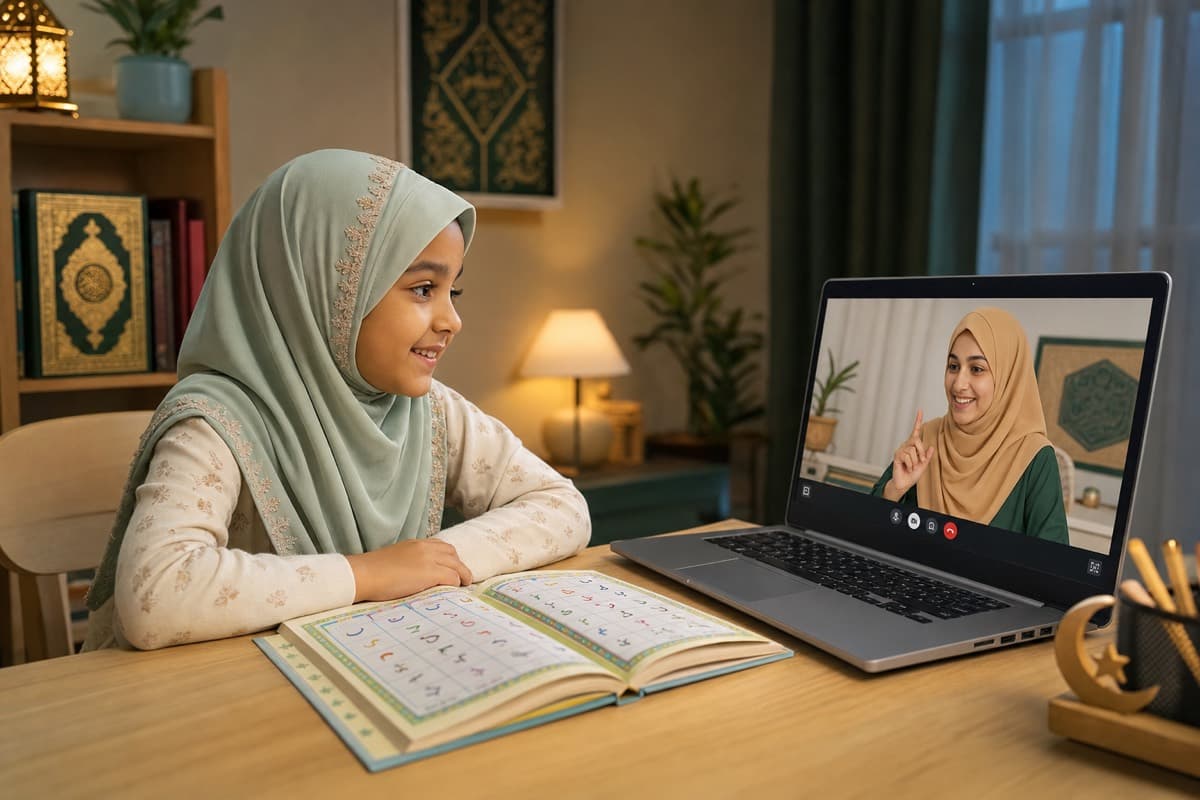
Online lessons bring a qualified Quran teacher to your home in Japan Standard Time. Lessons are taught in English, so they suit families where the child or parent is comfortable following English explanations.
How do Quran lessons fit around Japanese school, juku and club activities?
Pick one or two short, fixed slots in JST — often a weekday evening or a weekend morning — and protect them like juku.
Japan Standard Time is UTC+9 all year with no daylight saving, so once a slot is agreed it stays at the same local time. The Japanese school year starts in April; a new timetable or club schedule is a good moment to review the lesson time.
Exams and school events will clash sometimes. A class can be moved with 24 hours' notice, subject to tutor availability.
- Younger children: a short slot soon after school
- Children with bukatsu or juku: a later evening or a Saturday or Sunday morning
- Adults: later evenings after work
My child speaks Japanese all day. Will they lose their Quran reading?
Not if they read aloud to a teacher every week. Regular short lessons keep Arabic letters and sounds fresh.
Children who spend the whole school day in Japanese often find Arabic letters slipping, especially if there is no Quran class nearby. A weekly one-to-one lesson, plus a few minutes of reading at home, keeps the habit going and lets the tutor catch mistakes early.
If your child has never started, they begin with Noorani Qaida — letter shapes, sounds and joining — and move to the Mushaf when ready.
Which course should the learner begin with?
The tutor checks reading in the trial and suggests a starting point.
| If the learner… | They usually start with |
|---|---|
| Doesn't recognise Arabic letters yet | Noorani Qaida from the beginning |
| Knows letters but reads slowly | Qaida revision and joining practice |
| Reads the Mushaf with some mistakes | Guided Quran reading with Tajweed correction |
| Reads well and wants to memorize | Hifz with structured revision |
Before choosing a plan, review NoorPath's published pricing, tutor-matching information and safeguarding guidance.
Can adults and new Muslims in Japan learn too?
Yes. Adults can start from the alphabet, return after years away or work on Tajweed, one-to-one and at their own pace.
New Muslims in Japan often have no one locally to learn from. A private lesson means nobody else hears your mistakes. Lessons are in English, so a working level of English helps.
Who will teach, and how are children kept safe?
Every NoorPath tutor holds an Ijazah or a Quran teaching certificate, and parents can ask to see it. You meet the tutor in the trial before paying.
Female tutors are available for sisters, daughters and young children. Ask for a female tutor when you enquire; one is assigned subject to availability and confirmed before the trial. If you or your child are not comfortable with the tutor, NoorPath changes the tutor immediately.
For children, a parent should arrange lessons, stay nearby and use NoorPath's official contact channels.
How do fees work from Japan?
Plans are priced and billed in US dollars, from $29 a month, after 3 free 30-minute trial sessions with no card needed.
Your bank or card provider converts the USD charge to Japanese yen at its own rate and may add fees; the plans section on this page shows approximate JPY amounts. Sibling discounts are 15% for 2 siblings, 20% for 3 siblings, 25% for 4+ siblings. A full refund is available if you ask within 7 days of the first paid class, and plans can be cancelled with 7 days' notice before the next billing date.
What do you need at home?
A laptop or tablet with a camera, a stable connection, Zoom, headphones and a Qaida or Mushaf.
Lessons are online, so a typhoon or heavy-rain day that closes schools does not have to stop them, as long as you have power and a connection at home.