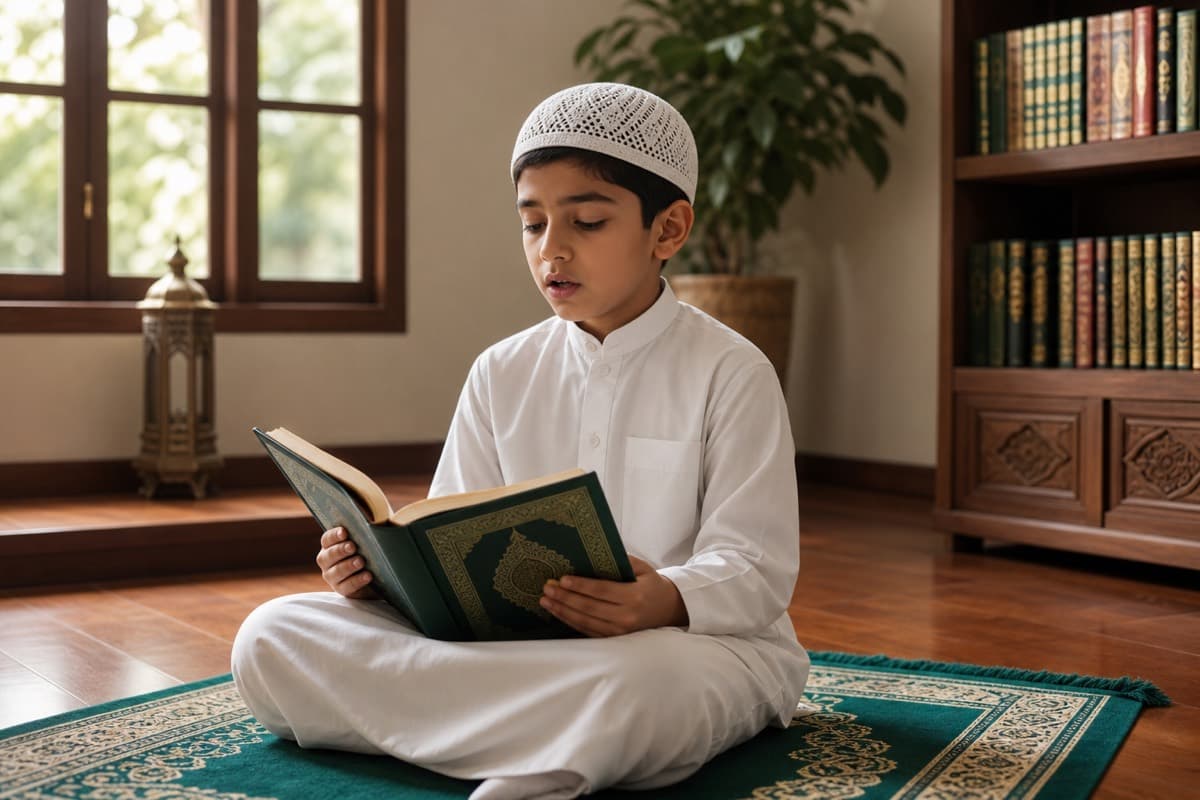
Guide for families in Pakistan
Online Quran Classes in Pakistan: A Parent's Guide to Nazra, Tajweed and Hifz at Home
How Pakistani families can use live one-to-one online lessons for Nazra with Tajweed, Hifz and adult learning — choosing a starting point, planning around school and power cuts, checking tutors, fees and progress.
Reviewed 4 November 2026· Service details are checked against NoorPath's published policies and current booking process. Read the editorial policy.
Is online Quran learning a good fit for your child in Pakistan?
It suits families who want their child to read with correct Tajweed and get one teacher's full attention, without a daily trip to a Quran centre.
In a busy masjid class or Quran centre, a teacher may hear each child recite for only a few minutes. In a one-to-one online lesson the whole session is your child's turn: every letter is heard, every mistake is corrected straight away, and the pace matches your child rather than the group.
Online lessons are not the only right answer. Some children thrive in a local group with friends; others drift when nobody is listening closely. Many parents keep a local routine and add a short online lesson for focused recitation practice. The trial is the honest way to see which your child needs.
- Children who are shy about reciting in front of a group
- Families where school, tuition and traffic leave little time for travel
- Learners who need slower, patient correction of specific letters
- Adults who want to learn privately at their own pace
Nazra, Tajweed or Hifz: where should your child start?
Most children start with Noorani Qaida, move into Nazra (reading the whole Quran) with Tajweed, and only then consider Hifz. The tutor confirms the starting point in the trial.
Rushing from Qaida into the Mushaf is the most common reason children read quickly but incorrectly. A tutor checks letter sounds, joining and vowel marks before moving on. Read more about how Noorani Qaida is taught and learning Tajweed online.
| Where your child is now | Usual starting point |
|---|---|
| Doesn't know the Arabic letters yet | Noorani Qaida from the beginning |
| Knows letters but joins slowly or guesses | Qaida revision, then early Nazra |
| Reads the Mushaf but makes pronunciation mistakes | Nazra with Tajweed correction |
| Reads fluently and wants to memorize | Hifz, with regular revision |
How do lessons fit around school and tuition in PKT?
Choose a short, regular slot your child can keep every week — usually after school and lunch, early evening, or weekend mornings — in Pakistan Standard Time.
Pakistan Standard Time is UTC+5 all year, with no daylight saving. Lesson times are agreed in PKT and confirmed after a tutor is matched; there is no fixed public timetable.
A few shorter lessons a week usually work better for children than one long session. If school exams or a family event clash, a class can be moved with 24 hours' notice, subject to tutor availability. Our article on balancing school and online Quran in Pakistan has more ideas.
What setup do you need, and what about power cuts?
A phone, tablet or laptop with a camera, a stable connection and headphones are enough. A backup plan for outages keeps lessons on track.
Load-shedding and connection drops are a reality for many households, so plan for them rather than hoping they won't happen.
- Charge the device before each lesson, and keep a UPS or power bank if you can
- Keep mobile data available as a backup if your home internet drops
- Use headphones so the tutor hears your child clearly and background noise stays low
- Choose a quiet corner where a parent can see and hear the lesson
- If you know about a scheduled outage, move the class with 24 hours' notice
Before choosing a plan, review NoorPath's published pricing, tutor-matching information and safeguarding guidance.
How do you know you can trust the tutor?
Every NoorPath tutor holds an Ijazah or a Quran teaching certificate, and parents can ask to see it. You meet the tutor in the trial before paying.
Female tutors are available for sisters, daughters and young children. Mention a female tutor preference when you enquire; it is assigned subject to availability and confirmed before the trial. If you or your child are not comfortable with the tutor, NoorPath changes the tutor immediately.
Parents should arrange lessons for children, stay nearby during class and use official contact channels. See our safeguarding guidance for parents.
What do online Quran classes cost?
Plans start at $29 a month and are billed in US dollars. New students start with 3 free 30-minute trial sessions, with no credit card.
NoorPath bills in USD, and your bank or card provider converts the charge at its own rate. Sibling discounts are 15% for 2 siblings, 20% for 3 siblings, 25% for 4+ siblings. A full refund is available if you ask within 7 days of the first paid class, and plans can be cancelled with 7 days' notice before the next billing date.
| Plan | What it includes |
|---|---|
| Starter — $29/month | 1 one-to-one lesson a week, 30 minutes each (4 a month) |
| Standard — $49/month | 2 one-to-one lessons a week, 45 minutes each (8 a month) |
| Intensive — $79/month | 4 one-to-one lessons a week, 60 minutes each (16 a month) |
How will you know your child is progressing?
Look for fewer repeated corrections, smoother joining and confident reading of new pages — not a promised finishing date.
Enrolled families get Parent Portal access showing attendance, homework, quizzes, daily progress and teacher reports. Ask the tutor which letters or rules your child is working on this month, and listen to five minutes of practice at home between lessons.
Every child moves at a different pace depending on age, starting level, lesson frequency and home practice, so NoorPath does not promise a fixed date to finish Nazra or Hifz.