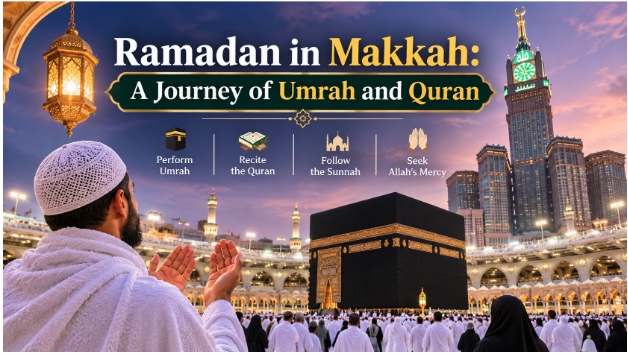
The Spiritual Importance of Ramadan in Makkah
Ramadan is the month in which the Holy Quran was revealed as guidance for humanity. Allah (SWT) says:
"The month of Ramadan is that in which was revealed the Quran, a guidance for the people and clear proofs of guidance and criterion." (Surah Al-Baqarah 2:185)
This verse highlights the special relationship between Ramadan and the Quran. It is a month when Muslims are encouraged to increase their recitation, understand the meanings of the Quran, and apply its teachings in everyday life.
Spending Ramadan in Makkah allows Muslims to experience this connection in an extraordinary setting. The Masjid al-Haram welcomes worshippers throughout the day and night. Muslims gather to perform Salah, recite the Quran, make dua, and remember Allah.
The spiritual environment encourages visitors to leave behind everyday distractions and concentrate on their faith. Whether someone is performing Tawaf, offering voluntary prayers, or sitting quietly near the Kaaba, every moment can become an opportunity for reflection and spiritual improvement.
The Connection Between Umrah and the Holy Quran
Umrah is an act of worship that allows Muslims to visit the Sacred House of Allah and perform specific religious rituals. Although Umrah can be performed throughout the year, Ramadan holds a particularly significant place in Islamic teachings.
The Prophet Muhammad (PBUH) explained the special virtue of performing Umrah during Ramadan. According to an authentic hadith narrated by Ibn Abbas (RA), the Prophet (PBUH) said:
"Umrah in Ramadan is equivalent to Hajj." (Sahih al-Bukhari and Sahih Muslim)
This hadith demonstrates the immense reward associated with performing Umrah during the blessed month. However, it is important to understand that this reward does not mean Ramadan Umrah replaces the obligatory Hajj for someone who is required to perform it.
The rituals of Umrah also connect deeply with the values taught in the Quran.
1. Ihram and Spiritual Purification
Ihram marks the beginning of the Umrah journey. It reminds Muslims of humility, equality, and obedience to Allah. Wearing simple garments removes distinctions of wealth, status, and appearance.
2. Tawaf and Remembering Allah
Walking around the Holy Kaaba seven times expresses devotion and submission. During Tawaf, pilgrims can engage in dua, dhikr, and personal supplications.
3. Sa'i and Trust in Allah
Walking between Safa and Marwah commemorates the struggle of Hajar (AS), who searched for water for her son Ismail (AS). Her story teaches patience, determination, and complete trust in Allah.
4. Halq or Taqsir and Renewal
Completing Umrah with shaving or trimming the hair symbolises obedience and the completion of the pilgrimage rituals. It also provides an opportunity to reflect on spiritual renewal.
Each stage of Umrah offers a meaningful reminder of the Quranic values of faith, patience, gratitude, and devotion.
Experiencing the Quran in Masjid al-Haram During Ramadan
One of the most beautiful experiences of Ramadan in Makkah is listening to the Holy Quran being recited during congregational prayers.
During Ramadan, worshippers attend Isha and Taraweeh prayers at Masjid al-Haram. These prayers offer an opportunity to listen to extended Quranic recitation and reflect on Allah's messages.
The Prophet Muhammad (PBUH) encouraged Muslims to stand in prayer during Ramadan. He said:
"Whoever stands in prayer during Ramadan out of faith and seeking reward will have their previous sins forgiven." (Sahih al-Bukhari and Sahih Muslim)
This hadith highlights the importance of night worship during Ramadan.
Pilgrims can make their Quran experience more meaningful by following a simple routine:
- Read a portion of the Quran after Fajr.
- Listen carefully to Quranic recitation during Taraweeh.
- Read the translation to understand the meaning of verses.
- Memorise short surahs and important duas.
- Reflect on the lessons of the Quran before sleeping.
- Spend time making sincere dua for family, friends, and the Muslim Ummah.
Rather than focusing only on completing the Quran, Muslims should also try to understand its message and implement its teachings.
Following the Sunnah During Ramadan Umrah
The Sunnah of Prophet Muhammad (PBUH) provides guidance on how to worship Allah with sincerity and good character. Performing Umrah during Ramadan is not only about completing the rituals; it is also about following the Prophet's example.
The Prophet (PBUH) was generous throughout the year, but his generosity increased during Ramadan. Ibn Abbas (RA) narrated that the Messenger of Allah (PBUH) was the most generous of people, and even more generous during Ramadan, when Jibreel (AS) met him to study the Quran. (Sahih al-Bukhari)
Pilgrims can follow this beautiful Sunnah by helping others, sharing food, giving charity, and treating fellow worshippers with kindness.
Other important Sunnah practices include:
Eating Suhoor: The Prophet (PBUH) encouraged Muslims to eat Suhoor because it is blessed. (Sahih al-Bukhari and Sahih Muslim)
Breaking the Fast Promptly: Muslims are encouraged to break their fast when Maghrib begins.
Making Dua: Ramadan is an excellent opportunity to make sincere supplications and ask Allah for forgiveness and guidance.
Maintaining Good Character: Avoiding arguments, showing patience, and respecting others are essential parts of fasting.
Observing I'tikaf: The Prophet (PBUH) regularly observed I'tikaf during the last ten days of Ramadan, seeking Laylat al-Qadr.
By following these teachings, pilgrims can make their Ramadan journey more meaningful and spiritually rewarding.
Planning Your Ramadan Umrah Journey from the UK
For Muslims living in the United Kingdom, travelling to Makkah during Ramadan requires thoughtful preparation. Because Ramadan is a popular time for Umrah, flights, accommodation, and transport can become highly competitive.
Planning a Ramadan Umrah journey from UK in advance can help pilgrims organise their travel while keeping their attention on worship rather than last-minute arrangements.
Here are some important considerations:
1. Choose Your Travel Dates Carefully
The first ten days of Ramadan may offer a different atmosphere from the final ten days. The last ten nights are particularly special because Muslims seek Laylat al-Qadr, the Night of Decree, which Allah describes as better than a thousand months in Surah Al-Qadr.
2. Book Accommodation Near Masjid al-Haram
Choosing a hotel within a convenient distance of the Haram can make it easier to attend daily prayers, Taraweeh, and Tahajjud. This is especially helpful for elderly pilgrims, families, and people with mobility difficulties.
3. Prepare Your Travel Documents
Check passport validity, Saudi visa requirements, travel insurance, and any applicable health or vaccination guidance before departure. Requirements can change, so consult official Saudi government sources before travelling.
4. Prepare Physically and Spiritually
Umrah involves walking and standing for extended periods. Gentle walking before departure can help improve stamina. It is also beneficial to learn the Umrah rituals and revise important duas before travelling.
5. Create a Daily Worship Schedule
A simple routine that includes Quran recitation, obligatory prayers, rest, and voluntary worship can help pilgrims maintain consistency throughout Ramadan.
Finding Suitable Umrah Flight Tickets 2027
Flight arrangements are another important part of planning a Ramadan pilgrimage. Muslims travelling from the UK should compare airlines, departure airports, baggage allowances, transit times, and arrival options before booking.
Searching for Umrah flight tickets 2027 early can help travellers explore available routes and plan their journey around their preferred Ramadan dates.
When comparing flights, consider the following factors:
- Departure airports: Compare flights from London Heathrow, Manchester, Birmingham, and other convenient UK airports.
- Arrival airports: Jeddah is commonly used for pilgrims travelling to Makkah, while Madinah may suit those planning to visit the Prophet's Mosque first.
- Flight duration: Direct flights can reduce travel fatigue, while connecting flights may offer more budget-friendly options.
- Baggage allowance: Check luggage limits, especially if travelling with family.
- Flexible tickets: Consider fare conditions and cancellation policies before booking.
- Travel dates: Ramadan dates depend on the Islamic lunar calendar, so confirm the expected dates and allow flexibility where possible.
It is also worth remembering that Ramadan 2027 is expected to begin around early February, subject to moon sighting. Travellers should verify the final dates through official announcements.
Making the Most of the Last Ten Nights in Makkah
The last ten nights of Ramadan are among the most spiritually significant nights of the year. Muslims seek Laylat al-Qadr, which Allah describes in the Quran:
"The Night of Decree is better than a thousand months." (Surah Al-Qadr 97:3)
Spending these nights in Makkah can be an extraordinary opportunity for worship. The atmosphere of Masjid al-Haram, combined with the blessings of the final days of Ramadan, encourages Muslims to increase their devotion.
The Prophet Muhammad (PBUH) would exert himself in worship during the last ten nights, wake his family, and devote himself to worship. (Sahih al-Bukhari and Sahih Muslim)
A useful way to make these nights meaningful is to:
- Perform obligatory prayers on time.
- Attend Taraweeh and Tahajjud where possible.
- Recite and understand the Quran.
- Give charity to those in need.
- Make sincere dua and seek forgiveness.
- Avoid unnecessary distractions.
- Follow the Sunnah of maintaining good character.
A well-balanced routine should also include sufficient rest, food, and hydration during non-fasting hours.
Practical Tips for a Comfortable Ramadan in Makkah
Although the spiritual rewards of Ramadan Umrah are immense, pilgrims should also prepare for the practical challenges of travelling during a busy season.
Stay Hydrated: Drink sufficient water between Iftar and Suhoor to maintain energy during fasting hours.
Wear Comfortable Footwear: Choose suitable footwear for walking and keep it in a designated shoe bag when entering the mosque.
Follow Crowd Instructions: Always follow official security announcements and designated pedestrian routes around Masjid al-Haram.
Keep Essential Items Safe: Carry identification, accommodation details, and essential medicines securely.
Be Patient with Others: Makkah welcomes Muslims from different cultures and backgrounds. Patience, kindness, and respect make the pilgrimage more pleasant for everyone.
Avoid Overexertion: Do not sacrifice your health by trying to perform too many voluntary acts. Islam encourages moderation and taking care of one's body.
Conclusion: A Journey of Faith, Quran, and Spiritual Renewal
Ramadan in Makkah is much more than a journey to a sacred destination. It is an opportunity to reconnect with Allah, strengthen one's relationship with the Holy Quran, follow the Sunnah of Prophet Muhammad (PBUH), and develop habits that continue long after Ramadan ends.
Performing Umrah during this blessed month allows Muslims to experience the beauty of worship in the presence of the Holy Kaaba while benefiting from the special virtues mentioned in authentic hadith.
Whether it is listening to Quranic recitation during Taraweeh, making dua during the final ten nights, sharing Iftar with fellow Muslims, or performing Tawaf, every experience can become a meaningful part of one's spiritual development.
With proper planning, sincere intentions, and a commitment to the Quran and Sunnah, Ramadan in Makkah can become a life-changing journey that inspires a stronger connection with Islam and a renewed commitment to living according to the guidance of Allah (SWT).
Frequently Asked Questions (FAQs)
Yes. According to an authentic hadith in Sahih al-Bukhari and Sahih Muslim, the Prophet Muhammad (PBUH) explained that performing Umrah during Ramadan carries a reward equivalent to Hajj. However, it does not replace the obligation of performing Hajj.
2. Why is Ramadan special for visiting Makkah?
Ramadan is the month in which the Holy Quran was revealed. Visiting Makkah during this month allows Muslims to combine the blessings of fasting, Quran recitation, congregational prayers, charity, and Umrah in the sacred city.
Yes. Muslims can perform Umrah while fasting. However, they should consider their physical health, energy levels, and the demands of fasting. Performing Umrah at a suitable time and avoiding unnecessary exhaustion can make the experience more comfortable.
4. What should I recite during Tawaf?
There is no authentic obligatory dua prescribed for each individual round of Tawaf. Pilgrims may make personal supplications, recite Quran, and remember Allah. Between the Rukn al-Yamani and the Black Stone, it is Sunnah to recite the dua: "Rabbana atina fid-dunya hasanatan wa fil-akhirati hasanatan wa qina adhaban-nar."
5. What is the significance of the last ten nights of Ramadan in Makkah?
The last ten nights are particularly important because Muslims seek Laylat al-Qadr, a night described in Surah Al-Qadr as better than a thousand months. The Prophet Muhammad (PBUH) increased his worship during these nights and encouraged devotion, prayer, and supplication.
6. How early should I book my Ramadan Umrah flights from the UK?
It is advisable to research and book flights and accommodation several months in advance, particularly if travelling during the last ten nights of Ramadan. Early planning gives travellers more flexibility when comparing flight routes, hotels, and travel arrangements. Always check current visa and travel requirements before booking.