Digital Quran Learning Platform for Families
Digital Quran learning platform guide: digital vs traditional, what to inspect, and how NoorPath separates interactive Qaida, free games, and live lessons.
How to use this guide
A digital Quran learning platform is more than a website with a contact form. Families use the phrase to mean structured online learning: curriculum maps, practice tools, progress visibility, and often live tutors. Traditional paths — printed Qaida, local madrasah, or weekend school — still matter. Digital tools shine when geography, timetable, or specialised matching make local options thin. They fail when marketing invents features, locks learning behind unclear fees, or confuses a demo with a complete product. This guide defines what “digital” should mean, what to inspect before you trust a platform, and how NoorPath’s public stack actually works: an Interactive Noorani Qaida hub, free browser games, platform preview media, and separately booked live one-to-one classes. Families in diaspora settings especially benefit from tools that work on a phone after school, keep Arabic visible, and connect to a live tutor when sounds remain uncertain. Take ten minutes to inspect the curriculum map, try one recognition activity, and write down one question for a teacher before paying for any long package. That habit protects attention, money, and trust. Return to the Interactive Noorani Qaida hub whenever you need the full module list, letter index, or links to free games. Keep commercial class booking on the trial and pricing pages so practice tools stay uncluttered. If a claim on any site cannot be demonstrated in a short trial session or a visible public page, treat it as unfinished product work rather than a reason to enrol immediately. Share useful free practice links with another parent only when the resource is genuinely calm and accurate. Over time, small honest routines outperform dramatic marketing promises, especially for beginners building Arabic letter confidence before full Quran pages. Choosing a platform is also a safeguarding decision. Prefer providers who explain adult supervision for young learners, avoid dark-pattern upsells during practice, and separate free tools from paid enrolment clearly. Look for curriculum maps you can read without logging in. Test whether the site works on your phone’s browser without forcing an app install. Ask how progress is stored — local checklist versus cloud account — and what that means for privacy. A strong digital Quran learning platform for beginners should make Arabic readable, practice measurable, and human help reachable. Anything that only sells vibes without a pathway should wait until you can verify lessons in a short trial.
Digital versus traditional Quran learning
Traditional settings offer presence, community, and often immediate listening. Digital platforms offer scheduling flexibility, recorded structure, and access when no nearby teacher fits. Neither is automatically superior. Digital is a delivery and practice layer. It still needs accurate Arabic content and a correction path. Prefer hybrids: digital practice between live sessions, or live online sessions with a clear curriculum reference the parent can open anytime.
What to look for in a digital Quran learning platform
Look for a transparent curriculum sequence, age-aware guidance, open or clearly explained navigation, safeguarding expectations for children, honest audio and credential claims, and a trial before large commitment. Check whether “platform” means self-serve lessons, live classes, or both — and whether those products are priced and described separately. Ambiguous bundles create disappointment.
- Clear beginner pathway (e.g. Qaida modules)
- Practice tools with stated learning goals
- Human correction option
- Honest feature disclosures
- Published trial and pricing rules
How NoorPath’s digital stack is organised
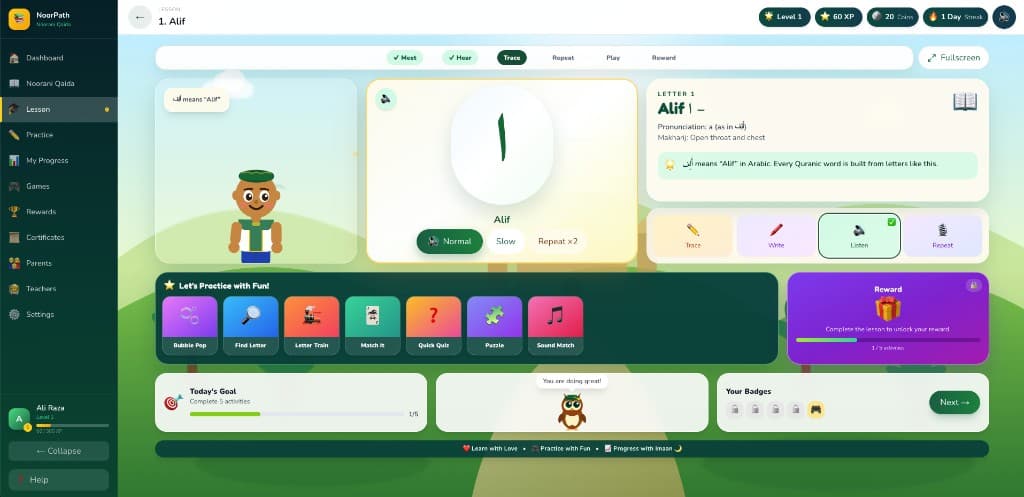
The Interactive Noorani Qaida hub at /noorani-qaida is the informational and practice-reference centre: 11 modules, 28 letters, lessons, tajweed foundations, and guides. Free games live under /noorani-qaida/games. Live Noorani Qaida and Quran classes are commercial services with their own course and class pages, including a free trial process that confirms tutor availability after request. Platform preview screenshots and video help families see lesson organisation; they are labelled as previews, not as unlimited public demos of every module mode. This separation keeps SEO and product honesty aligned: reference and games are openly usable; live teaching is matched and scheduled.
Self-paced digital practice: strengths and limits
Self-paced tools help recognition, routine, and parent visibility. Limits appear at pronunciation accuracy, motivation during hard letters, and readiness decisions for mushaf reading. NoorPath’s letter widgets and games address recognition. They do not certify Tajweed. Plan for live input when the child stalls on sounds or joins.
Live digital classes inside a platform strategy
Live online 1-to-1 lessons supply listening, pacing, and accountability. Ask how matching works (level, age, timezone, male/female preference). NoorPath confirms availability after the request rather than promising every slot instantly. That is less flashy than “teachers available 24/7” banners and more accurate for operations. Combine class notes with the hub’s letter pages so home practice matches the tutor’s targets.
Choosing without getting lost in apps
Make a short scorecard: curriculum clarity, practice tools, correction path, safeguarding, pricing honesty, and fit for your child’s attention. Run a one-week test: three short digital practice sessions and one live trial if needed. Keep what improves calm accuracy. Discard what only increases screen time. A good digital Quran learning platform earns trust by what it refuses to exaggerate.
A one-week action plan parents can follow
Day one: open the Interactive Noorani Qaida hub and note the module that matches your child. Day two: run a five-minute recognition session on one letter or vowel using a letter page or free game. Day three: ask your child to teach you one form difference they noticed. Day four: repeat yesterday’s target and add one contrast letter. Day five: if sounds feel uncertain, request a free live trial or message the tutor with specific letters. Weekend: light review only — one favourite letter and one known success. Write observations in a shared note so adults stay aligned. This rhythm builds evidence without turning the week into a performance. Adjust timing for your timezone and school load, and keep devices in a family space for younger children. If motivation drops, shorten the session rather than adding louder entertainment. Progress in beginner Quranic Arabic is usually quiet and cumulative; protect that quiet with clear targets and honest tools.
See the learning approach
This screenshot documents NoorPath’s learning-platform experience. It is shown for educational and product context. Free playable browser games are linked below separately from the platform screenshots.
Digital Quran Learning Platform for Families checklist
Separate practice tools from live class offers
Inspect curriculum maps before paying
Use NoorPath hub + games for recognition practice
Book a free trial when you need live correction
Avoid platforms that invent audio or credential claims
Frequently asked questions
What should a digital Quran learning platform include for beginners?
A clear beginner pathway such as Noorani Qaida, practice tools with stated goals, honest audio and credential disclosures, safeguarding guidance for children, and a way to obtain live correction when needed.
Is NoorPath a self-paced app or a live online academy?
Both layers exist and are described separately. The Interactive Noorani Qaida hub and free games support practice and reference; live one-to-one classes are booked through NoorPath’s class and trial flows with tutor matching.
How is a digital platform different from a Noorani Qaida PDF?
A PDF offers stable print reading. A digital platform can add prompts, games, progress views, and linked lessons. Both still need accurate Arabic and suitable feedback. See also the PDF versus interactive guide on this site.
Continue exploring
Want guided Noorani Qaida lessons?
Explore live one-to-one classes for ages 4+, with tutor matching based on learner needs, timezone, and availability.