Gamified Quran Learning for Kids Online
Gamified Quran learning for kids explained: useful game design, free NoorPath letter and harakat games, and how to avoid reward traps that skip foundations.
How to use this guide
Gamified Quran learning for kids is popular because children already understand games: short rounds, clear goals, and feedback. Used well, gamification turns recognition and recall into something a child will repeat. Used poorly, it rewards speed, noise, or unlocks while Arabic reading stays weak. This guide defines useful gamification for Noorani Qaida, explains what NoorPath actually ships on the public website, and shows how to keep games subordinate to modelling and teacher correction. You will leave with a practical routine — not a promise that stars equal Tajweed mastery. Families in diaspora settings especially benefit from tools that work on a phone after school, keep Arabic visible, and connect to a live tutor when sounds remain uncertain. Take ten minutes to inspect the curriculum map, try one recognition activity, and write down one question for a teacher before paying for any long package. That habit protects attention, money, and trust. Return to the Interactive Noorani Qaida hub whenever you need the full module list, letter index, or links to free games. Keep commercial class booking on the trial and pricing pages so practice tools stay uncluttered. If a claim on any site cannot be demonstrated in a short trial session or a visible public page, treat it as unfinished product work rather than a reason to enrol immediately. Share useful free practice links with another parent only when the resource is genuinely calm and accurate. Over time, small honest routines outperform dramatic marketing promises, especially for beginners building Arabic letter confidence before full Quran pages.
What gamification should practise in Quran learning
In early Quranic Arabic, the highest-value game targets are visual discrimination (find the letter), sound-symbol matching after a model, sequencing, and spaced recall. Games that only reward tapping colourful objects without a named target waste attention. Before playing, state the outcome in one sentence: “Find Noon among Baa-family shapes,” or “Name the mark on بَ.” If you cannot name the outcome, the game is entertainment. Gamification is successful when the child can later succeed without the game chrome — on a plain page or mushaf line.
Rewards that motivate without locking learning
Stars, badges, and progress checklists can acknowledge effort. They become harmful when curriculum access is locked behind scores, or when children refuse practice without a prize. Prefer open navigation: the learner can revisit any letter. Prefer process praise: careful looking, patient retrying, asking for help. NoorPath’s public games and checklist do not require an account and do not gate the letter index. Platform preview materials describe rewards that record activity without blocking modules — an important honesty check when comparing apps that sell “levels.”
Free NoorPath games you can play today
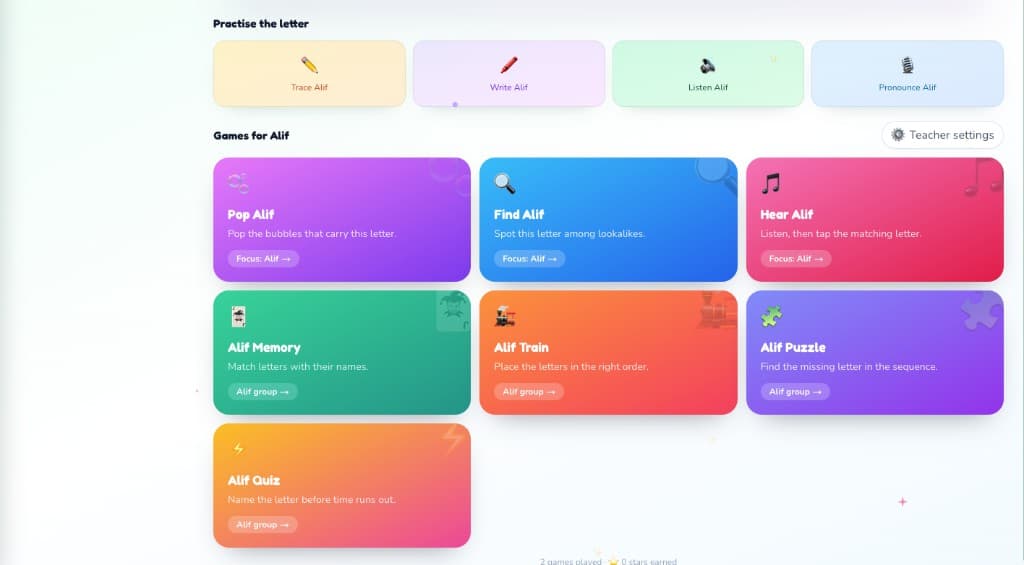
On noorpath.online, families can open a free games hub with three browser activities. The Arabic letter matching game asks the child to match a glyph to its name. The harakat quiz practises Fatha, Kasra, and Damma recognition and links back to vowel lessons. The progress checklist helps parents tick skills covered and share a simple summary — without inventing certificates. Letter pages also include a find-the-letter widget. These are client-side tools: no login, mobile-friendly, recognition-focused. They do not grade pronunciation or replace live classes.
- /noorani-qaida/games — games hub
- Letter matching for alphabet recognition
- Harakat quiz for short vowels
- Progress checklist for parent tracking
How teachers and parents should sequence games
Model first. Play second. Review third. A game that introduces an unmodelled sound teaches guessing. After a live lesson or clear model, use three to five rounds, then stop. If the child guesses repeatedly, reduce distractors or return to the letter page. Teachers can assign one game as homework only when the skill was taught that day. Parents should avoid stacking multiple new games in one evening. Consistency beats novelty.
Red flags in gamified Quran products
Be cautious of products that promise Tajweed mastery through games alone, that hide tutor credentials, that require large upfront payments before a trial, or that replace all human listening with automated scores. Automated feedback can flag possible differences; it should not be treated as final proof of articulation. Also watch for dark patterns: fake urgency, invented “parents online now” counters, or social proof numbers with no source. NoorPath’s public sharing tools are optional WhatsApp or native share links without fabricated counters.
Combining games with live Quran classes
Games keep recognition warm between lessons. Live one-to-one classes catch sounds games cannot judge. A practical weekly pattern is two or three live sessions plus short game-based review on off days. When booking a trial, tell the tutor which games the child enjoys and which letters still confuse them. That turns gamification into diagnostic information rather than distraction. Explore kids class options when you are ready for guided correction.
A one-week action plan parents can follow
Day one: open the Interactive Noorani Qaida hub and note the module that matches your child. Day two: run a five-minute recognition session on one letter or vowel using a letter page or free game. Day three: ask your child to teach you one form difference they noticed. Day four: repeat yesterday’s target and add one contrast letter. Day five: if sounds feel uncertain, request a free live trial or message the tutor with specific letters. Weekend: light review only — one favourite letter and one known success. Write observations in a shared note so adults stay aligned. This rhythm builds evidence without turning the week into a performance. Adjust timing for your timezone and school load, and keep devices in a family space for younger children. If motivation drops, shorten the session rather than adding louder entertainment. Progress in beginner Quranic Arabic is usually quiet and cumulative; protect that quiet with clear targets and honest tools.
See the learning approach
This screenshot documents NoorPath’s learning-platform experience. It is shown for educational and product context. Free playable browser games are linked below separately from the platform screenshots.
Gamified Quran Learning for Kids Online checklist
State one skill before starting a game
Model the sound or shape first
Keep rounds short and stop on success
Use NoorPath free games for recognition only
Schedule live correction for hard letters
Frequently asked questions
What is the best gamified Quran learning approach for beginners?
Use games that target one recognition or recall skill after modelling, keep rewards from locking content, and pair short play with live listening for pronunciation. Recognition games are a strong starting point for Noorani Qaida.
Are NoorPath’s Quran letter games free to play without signing up?
Yes. The browser letter matching game, harakat quiz, and progress checklist on the Noorani Qaida games hub do not require an account. Live classes are a separate enrolment path.
Can gamified learning replace a Quran teacher for kids?
No. Games support practice and motivation. A teacher or approved model remains necessary for correcting uncertain articulation and guiding readiness for Quran pages.
Continue exploring
Want guided Noorani Qaida lessons?
Explore live one-to-one classes for ages 4+, with tutor matching based on learner needs, timezone, and availability.