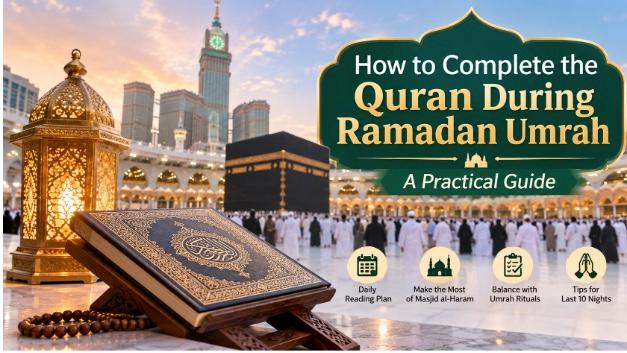
Ramadan is one of the most spiritually rewarding times to perform Umrah. For many Muslims, travelling to Makkah during this blessed month offers an opportunity to strengthen their relationship with Allah, increase their worship, and dedicate more time to the Holy Quran. With the additional blessings associated with Ramadan, many pilgrims also set themselves a personal goal of completing the Quran during their stay.
However, completing the Quran while managing Umrah rituals, daily prayers, rest, and other religious activities requires a realistic plan. Whether you are visiting Makkah for the first time or have performed Umrah several times, organising your reading schedule can help you make the most of your time.
This practical guide explains how to plan your Quran recitation, manage your daily routine and maintain consistency throughout Ramadan.
1. Understand the Quran Reading Target
The Holy Quran contains 30 Juz (parts), making it easier to divide the recitation across the 30 days of Ramadan. If your stay covers the entire month, reading one Juz daily is a straightforward way to complete the Quran.
One Juz generally consists of approximately 20 pages in the commonly used Madinah Mushaf.
You can divide your daily reading into smaller sessions rather than trying to complete everything at once.
For example:
- After Fajr: Read 4 pages.
- After Dhuhr: Read 4 pages.
- After Asr: Read 4 pages.
- After Maghrib: Read 4 pages.
- After Isha or Taraweeh: Read 4 pages.
This approach makes the daily target more manageable, particularly when you are spending several hours performing worship in the Haram.
2. Create a Daily Quran Reading Schedule
A consistent routine is more important than reading a large number of pages in one sitting. During Ramadan, your day will include fasting, prayers, meals, rest and Umrah activities.
Try to connect Quran recitation with your five daily prayers. This creates a natural reminder to continue reading without having to find a separate time every day.
If you are travelling with family, you can also agree on a shared reading schedule. However, keep your individual target realistic so that unexpected changes in your routine do not affect your progress.
Remember that the purpose is not simply to finish the Quran but also to understand its message and reflect on its teachings.
3. Make the Most of Your Time in Masjid al-Haram
Masjid al-Haram provides a special atmosphere for worship and reflection. Many pilgrims prefer reading the Quran between prayers because they are already present in the mosque.
You can use the time before or after Salah to complete a portion of your daily reading. Arriving early for prayers can also provide additional time for recitation.
A few practical suggestions include:
- Carry a small Mushaf if you prefer reading from a physical copy.
- Use a Quran application with bookmarks to track your progress.
- Choose a comfortable place where you can read without distractions.
- Keep your reading schedule flexible during particularly busy periods.
- Avoid rushing your recitation simply to reach your daily target.
During crowded periods, follow mosque instructions and avoid occupying walkways or areas needed by other worshippers.
4. Balance Quran Recitation with Umrah Rituals
One important consideration during Ramadan is balancing Quran recitation with the essential rituals of Umrah.
Tawaf, Sa'i, prayers and other acts of worship all require time and attention. If you are performing Umrah during the busy Ramadan period, allow additional time for travelling between locations and managing crowds.
Do not put unnecessary pressure on yourself to complete a fixed number of pages during particularly demanding days.
You can adjust your reading schedule around your religious responsibilities. For example, if you spend more time completing Tawaf and Sa'i, you can distribute the remaining Quran reading across other parts of the day.
The aim should be to maintain consistency while giving each act of worship the attention it deserves.
5. Use the Last Ten Nights for Reflection
The last ten nights of Ramadan are particularly significant for Muslims because Laylat al-Qadr falls within this period.
Many pilgrims increase their worship during these nights through Salah, Quran recitation, Dua and remembrance of Allah.
If you have already completed most of the Quran, use this period to revisit passages that have particular meaning for you. You can also read the translation of selected verses and reflect on their lessons.
Rather than focusing entirely on completing another reading cycle, consider giving yourself time for understanding and reflection.
6. Prepare Before Travelling to Makkah
Good preparation can make your Ramadan Umrah experience more organised. Before departure, establish a Quran reading routine at home so that you are familiar with your daily target.
If you are planning your Ramadan Umrah Journey, consider the following preparations:
- Download a reliable Quran application for offline reading.
- Keep a small notebook to record your daily progress.
- Learn the meaning of commonly recited Surahs.
- Plan your rest periods around prayer times.
- Pack comfortable clothing suitable for extended periods of worship.
- Discuss your daily routine with family members travelling with you.
It is also helpful to understand your accommodation arrangements and the distance from your hotel to Masjid al-Haram. This can help you organise your prayer and reading schedule more effectively.
7. What If You Cannot Complete the Quran During Ramadan?
Not every pilgrim will have the same amount of time, energy, or ability to complete the entire Quran during Ramadan. Some people may be travelling for a shorter period, while others may have family responsibilities or health-related limitations.
Do not allow an unfinished reading target to become a source of unnecessary stress.
Read according to your ability, maintain consistency and focus on understanding the Quran. Even a smaller amount of meaningful recitation can make your time in Makkah spiritually valuable.
The intention behind your worship matters, and your schedule should support a positive and sustainable experience.
8. Maintain Your Quran Routine After Returning Home
Completing the Quran during Ramadan is a meaningful achievement, but your connection with the Holy Quran should continue after returning home.
Try to maintain a daily reading habit, even if you can only manage a few pages. You can also continue studying translations, listening to Quran recitation, and reflecting on the teachings in your everyday life.
A consistent routine helps ensure that the spiritual habits developed during Ramadan become part of your regular life.
Final Thoughts
Completing the Quran during Ramadan while performing Umrah is a rewarding personal goal that requires preparation, consistency, and realistic expectations. By dividing your recitation into manageable portions, making the most of your time at Masjid al-Haram and balancing Quran reading with other acts of worship, you can make meaningful progress throughout the blessed month.
If you are planning your Umrah journey from the UK, Bismillah Travel can help you consider your accommodation and other travel arrangements. Having your trip well organised can allow you to spend more time focusing on your worship and making the most of your spiritual journey.
Ultimately, keep your intention sincere, recite at a comfortable pace, and use this blessed month to strengthen your connection with the Quran. May Allah accept your efforts, grant you a blessed Umrah, and make it a spiritually rewarding experience. Ameen.